
Why Inclusive Education Goes Beyond Special Needs: The Hidden Truth
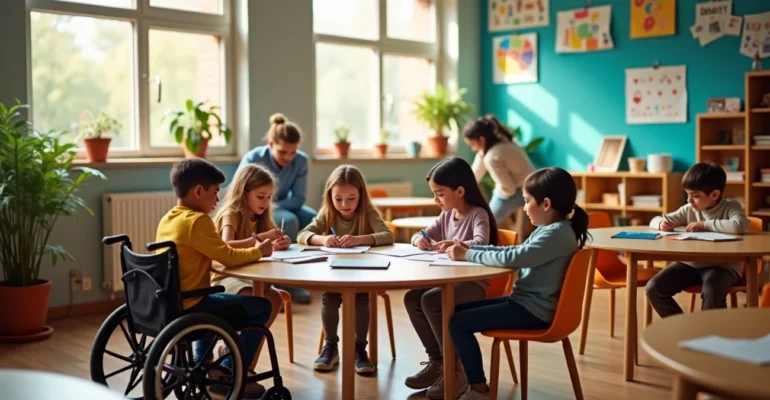

Why Inclusive Education Goes Beyond Special Needs: The Hidden Truth
Inclusive education extends far beyond accommodating students with disabilities, yet this comprehensive approach remains largely misunderstood in schools worldwide. While most educational discussions focus narrowly on special needs support, true inclusivity encompasses every child regardless of their background or circumstances.
However, creating genuinely inclusive learning environments requires understanding multiple factors. Schools must address cultural differences, economic barriers, and diverse learning styles—not just disability accommodations. Parents of neurodivergent children, along with those facing other exclusionary challenges, often struggle to find supportive educational settings. Additionally, the roles of counselors and shadow teachers have evolved significantly as our understanding of inclusivity expands beyond traditional boundaries.
This comprehensive guide explores the hidden dimensions of inclusive education, examines the various forms of exclusion still prevalent in schools today, and provides practical strategies for creating learning environments where every student can truly thrive. By the end, you’ll understand why inclusive education represents a fundamental shift in how we approach education for all children.
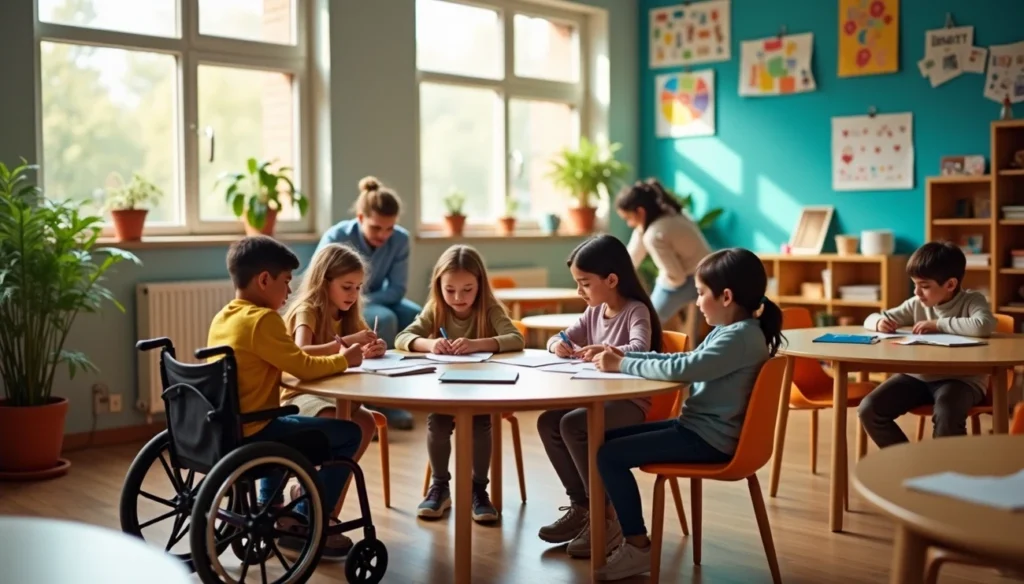
Understanding Inclusive Education Beyond Disabilities
True inclusive education encompasses a much broader vision than simply placing students with disabilities into mainstream classrooms. It represents a fundamental shift in educational philosophy that deserves deeper understanding.
What inclusive education really means
Inclusive education creates learning environments where all students participate fully, regardless of their backgrounds, abilities, or circumstances. It ensures real learning opportunities for groups who have traditionally faced exclusion—not only children with disabilities but also speakers of minority languages, those from different cultural backgrounds, and other marginalized populations 1.
At its core, inclusive education values the unique contributions students of all backgrounds bring to the classroom, allowing diverse groups to grow side by side for the mutual benefit of everyone involved 1. This approach recognizes that every child has the right to quality education that responds to their individual needs 2.
Fundamentally, inclusive education goes beyond a single program or intervention. Instead, it functions as both an educational goal and methodology that actively seeks to identify and dismantle barriers to education for all children 3. Schools practicing true inclusion develop systems and environments enabling every student to access education and learning equally 4.
How it differs from special education
Many parents and educators confuse inclusive education with special education, yet these approaches differ significantly in philosophy and implementation. Special education provides individualized instruction and support specifically designed for students with disabilities or learning difficulties 5. It primarily focuses on specialized services to address specific disabilities, often in separate settings 5.
In contrast, inclusive education embraces a whole-school approach where:
- All students learn together in the same environment
- Curriculum and teaching methods adapt to diverse needs
- Support services integrate into regular classroom activities
Furthermore, special education is need-based and individualized, meaning each student receives a different plan based on their specific requirements 5. While both approaches aim to support student growth, inclusive education does so by creating learning environments for all, whereas special education provides individualized education that sometimes occurs in separate settings 5.
One practical distinction lies in responsibility distribution. The primary responsibility for special education rests with special educators, whereas inclusive education involves all teachers and the entire school community working collaboratively 5. Indeed, successful inclusive schools often feature both practices complementing each other—special education services help students develop necessary skills while inclusive classrooms ensure social integration and equitable learning opportunities.
Why the term is often misunderstood
Throughout educational settings globally, misconceptions about inclusive education persist, limiting its proper implementation. The term initially focused primarily on accommodating students with disabilities but has subsequently expanded to address discrimination based on multiple factors including racial/ethnic identity, gender, sexual orientation, social class, and religious/cultural/linguistic differences 6.
Many educators mistakenly view inclusive education as simply a program rather than an educational philosophy valuing participation of all students 7. This misunderstanding leads to superficial implementation that fails to address systemic barriers to learning.
Other common misconceptions include beliefs that:
- Inclusive education is an unrealistic, one-size-fits-all approach 8
- It makes excessive demands on teachers without proper support 8
- Regular teachers lack necessary training to implement inclusion effectively 8
- Students without disabilities will suffer academically when classrooms include diverse learners 8
Crucially, inclusive education does not set boundaries around particular types of needs but works as an ongoing process to reduce barriers to learning for everyone 6. Research consistently demonstrates that inclusive environments benefit all students academically and socially, including those without disabilities 6.
For neurodivergent children and their parents, understanding the distinction between specialized support and true inclusion proves essential for advocating effectively within school systems.
The Many Faces of Exclusion in Education
Educational exclusion takes many forms beyond the visible barriers faced by students with disabilities. Understanding these diverse obstacles is crucial for creating genuinely inclusive learning environments where all children can thrive.
Cultural and linguistic barriers
Gender-based exclusion
Socioeconomic and geographic disadvantages
Key Stakeholders and Their Expanding Roles
Successful inclusive education requires coordinated efforts from multiple stakeholders, each with expanding responsibilities in creating equitable learning environments.
Teachers and school staff
Teachers stand at the forefront of inclusive education implementation, serving as the primary facilitators of learning for all students. Their role has evolved beyond traditional instruction to include identifying social, emotional, behavioral, physical, and academic strengths of every child, particularly those requiring additional support 19
To support this expanding role, professional development for teachers has become crucial. Training programs should cover cultural competence, differentiated instruction, and inclusive teaching strategies 20. First of all, school leadership must ensure teachers receive ongoing support to develop these skills, as research shows that without adequate learning opportunities, many educators feel unprepared to address diverse student needs 21.
Parents and families
Parents have historically been powerful advocates for inclusive education, often driving the movement to include children with disabilities in mainstream settings 5. Their involvement leads to numerous benefits, including enhanced student achievement, improved attendance rates, and better social-emotional development 22.
In essence, parents possess in-depth knowledge about their children’s needs that proves invaluable to educators and support staff 5. When parents participate actively in decision-making regarding their child’s educational goals and accommodations, they help create truly responsive learning environments 22.
Nevertheless, many schools struggle to nurture these vital partnerships 5. Research indicates that educators often focus simply on informing parents rather than building meaningful relationships, highlighting the need for improved communication channels 5.
Community and local leaders
Community engagement significantly enhances inclusive educational environments by helping bridge cultural, socioeconomic, and experiential gaps 23. Local community leaders play critical roles by:
- Identifying children with special needs in their locality
- Raising awareness about educational rights and opportunities
- Mobilizing resources to address diverse learning needs 6
Schools that engage with external partners—including businesses, nonprofits, and public institutions—can vastly increase their support capacity for all students 23. To begin with, community leaders can generate awareness among community members about inclusive education because they hold influential positions within the community 8.
Policy makers and government bodies
Government agencies at national and state levels create the framework for inclusive education through legislation and resource allocation. These bodies formulate innovative policies and programs while establishing guidelines for school administrators, curriculum developers, and teachers 6.
In addition to policy development, governments must provide financial resources and assistive devices to support students with diverse needs 6. Ultimately, comprehensive inclusive education policies require collaboration between multiple sectors including education, health, social care, and protection services 7.
Through initiatives like Inclusive Education Policy Learning Exchange, governments partner with civil society organizations, disability advocacy groups, academia, and the private sector to develop effective inclusive programs 7. This multi-stakeholder approach helps ensure that inclusive education moves beyond theory to practical, sustainable implementation.
Conclusion
Inclusive education represents a transformational shift far beyond the narrow focus on disability accommodations. Throughout this guide, we’ve seen how genuine inclusivity addresses multiple dimensions of diversity—cultural backgrounds, gender identities, socioeconomic circumstances, and geographic locations. Undoubtedly, schools that embrace this comprehensive approach create environments where all students genuinely thrive.
The path toward true inclusion, however, demands coordinated efforts from everyone involved. Teachers require adequate training and resources to differentiate instruction effectively. Parents must actively participate in educational decisions while school infrastructure needs fundamental redesigns for accessibility. Additionally, curriculum adaptations using Universal Design principles ensure learning opportunities reach every student.
Challenges certainly remain significant. Stigma persists in many communities while educational systems often maintain rigid assessment methods that disadvantage diverse learners. Nevertheless, proven strategies like collaborative learning models, technology integration, and peer support systems demonstrate how barriers can gradually diminish when approached systematically.
The distinction between special education services and inclusive educational philosophy becomes particularly important. Rather than competing approaches, they function as complementary elements of comprehensive support systems. After all, specialized interventions can still occur within inclusive environments that value every student’s contribution.
Creating truly inclusive schools ultimately benefits everyone—not just those traditionally marginalized. Students develop empathy, critical thinking skills, and preparation for diverse workplaces. Teachers gain professional satisfaction from reaching all learners. Societies become stronger through educational systems that cultivate each person’s unique potential.
The journey toward inclusive education requires commitment, resources, and fundamental belief in every child’s right to quality learning. Though significant progress has occurred, much work remains. Schools that embrace this broader understanding of inclusion take important steps toward educational environments where difference becomes not merely tolerated but celebrated as essential to human experience.
References
[1] – https://assets.publishing.service.gov.uk/media/5c6eb77340f0b647b214c599/374_Implementing_Inclusive_Education.pdf
[2] – https://www.oecd.org/content/dam/oecd/en/publications/reports/2021/05/adapting-curriculum-to-bridge-equity-gaps_858872f0/6b49e118-en.pdf
[3] – https://unesdoc.unesco.org/ark:/48223/pf0000265773
[4] – https://drexel.edu/soe/resources/student-teaching/advice/Promote-Inclusion-in-the-Classroom/
[5] – https://pmc.ncbi.nlm.nih.gov/articles/PMC8676702/
[6] – http://ijhssi.org/papers/vol13(5)/13056064.pdf
[7] – https://www.worldbank.org/en/topic/education/brief/inclusive-education
[8] – http://schoolofeducators.com/2012/03/community-leaders-in-education/
[9] – https://files.eric.ed.gov/fulltext/EJ1469631.pdf
[10] – https://newprairiepress.org/cgi/viewcontent.cgi?article=3671&context=aerc
[11] – https://www.gcedclearinghouse.org/sites/default/files/resources/240427eng.pdf
[12] – https://www.unicef.org/education/girls-education
[13] – https://www.cry.org/blog/cultural-barriers-to-girls-education-overcoming-deep-rooted-beliefs/
[14] – https://www.agendaalliance.org/news/school-exclusions-4-ways-girls-in-education-are-being-let-down/
[15] – https://www.apa.org/pi/ses/resources/publications/education
[16] – https://schooliofoundation.org/geographical-barriers-bringing-education-closer-to-home/
[17] – https://www.nature.com/articles/s41599-024-04068-0
[18] – https://publications.parliament.uk/pa/cm5802/cmselect/cmeduc/85/8506.htm
[19] – https://www.jetir.org/papers/JETIR1907D44.pdf
[20] – https://www.park.edu/blog/building-inclusive-educational-environments-strategies-for-leaders/
[21] – https://www.oecd.org/content/dam/oecd/en/publications/reports/2023/01/equity-and-inclusion-in-education_e8cfc768/e9072e21-en.pdf
[22] – http://publications.anveshanaindia.com/wp-content/uploads/2024/11/THE-ROLE-OF-PARENTAL-INVOLVEMENT-IN-SUPPORTING-INCLUSIVE-EDUCATION-.pdf
[23] – http://chartered.college/news-blogs/the-power-of-community-engagement-in-our-schools/
[24] – https://www.researchgate.net/publication/367780528_Implementation_Barriers_of_Inclusive_Education_and_Their_Impact_on_Stakeholders_A_Review_of_the_Literature
[25] – https://www.european-agency.org/sites/default/files/financing_of_inclusive_education_mapping_country_systems_for_inclusive_education.pdf
[26] – https://pressbooks.pub/thealttext/chapter/accessibility-issues-for-teaching-and-learning-in-k12/
[27] – https://www.researchgate.net/publication/356476168_Inclusive_education_is_another_country_developments_obstacles_and_resistance_to_inclusive_education
[28] – https://www.european-agency.org/sites/default/files/assessment-in-inclusive-settings-key-issues-for-policy-and-practice_Assessment-EN.pdf
[29] – https://teachingcommons.stanford.edu/teaching-guides/inclusive-teaching-guide/getting-started-inclusive-teaching/overview-inclusive
[30] – https://www.education.gov.in/sites/upload_files/mhrd/files/document-reports/Confluence.pdf
[31] – https://unhabitat.org.in/sites/default/files/2024-11/unh_iit_kgp_toolkit_on_enhancing_accessibility_inclusion_in_schools_compressed_1.pdf
[32] – https://book.all-means-all.education/ama-2025-en/chapter/inclusive-school-culture/
[33] – https://www.frontiersin.org/journals/education/articles/10.3389/feduc.2025.1527851/full
[34] – https://www.mdpi.com/2227-7102/15/6/715
[35] – https://iite.unesco.org/publications/technologies-for-inclusive-education-a-review-of-best-practices/
[36] – https://inclusiveschools.org/resource/peer-support-in-inclusive-settings/
[37] – https://inclusiveschools.org/resource/peers-supporting-an-inclusive-school-climate/